

de page
SEVEN TEARES FOR ELIZABETH

INTENTION
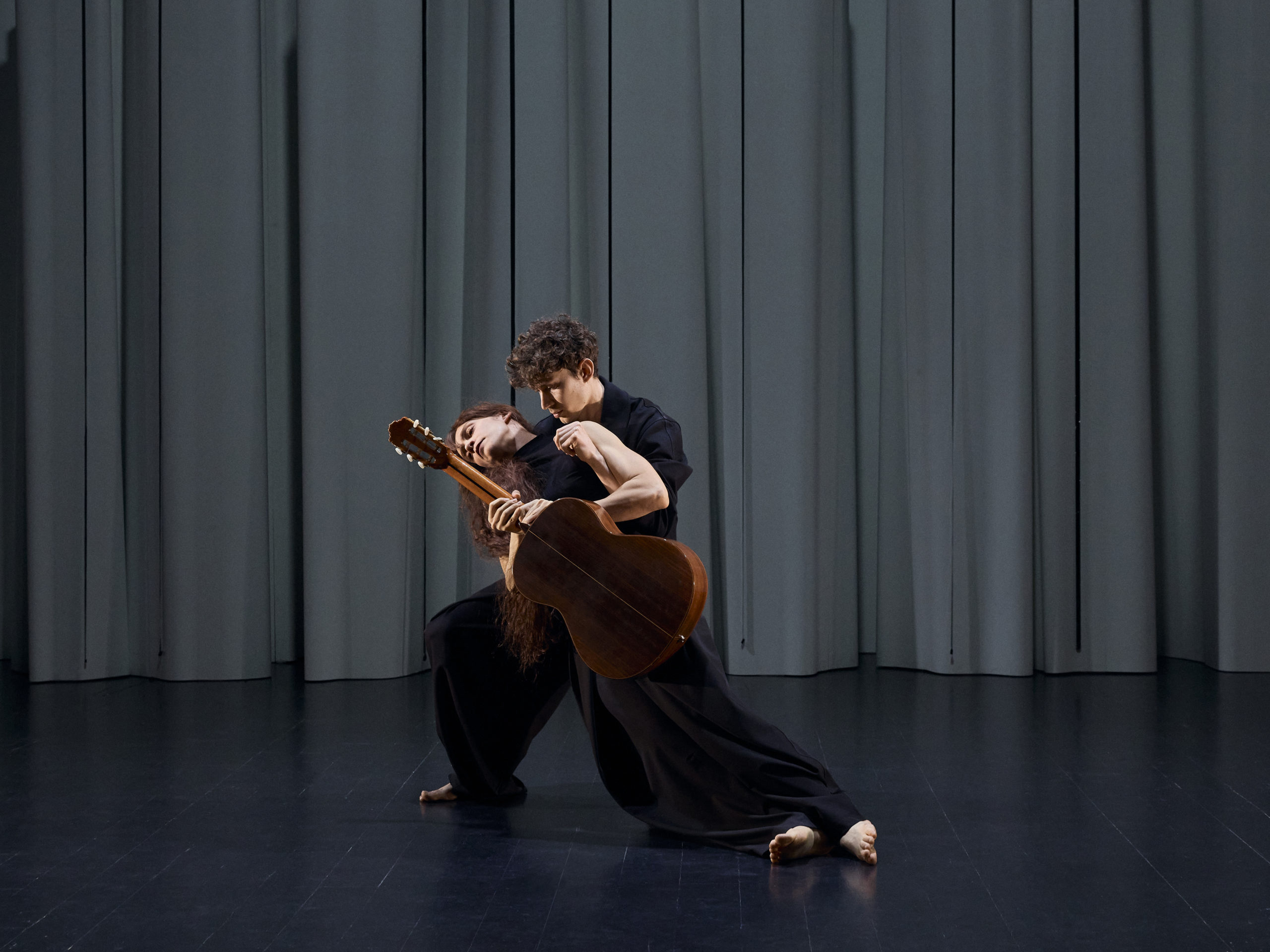
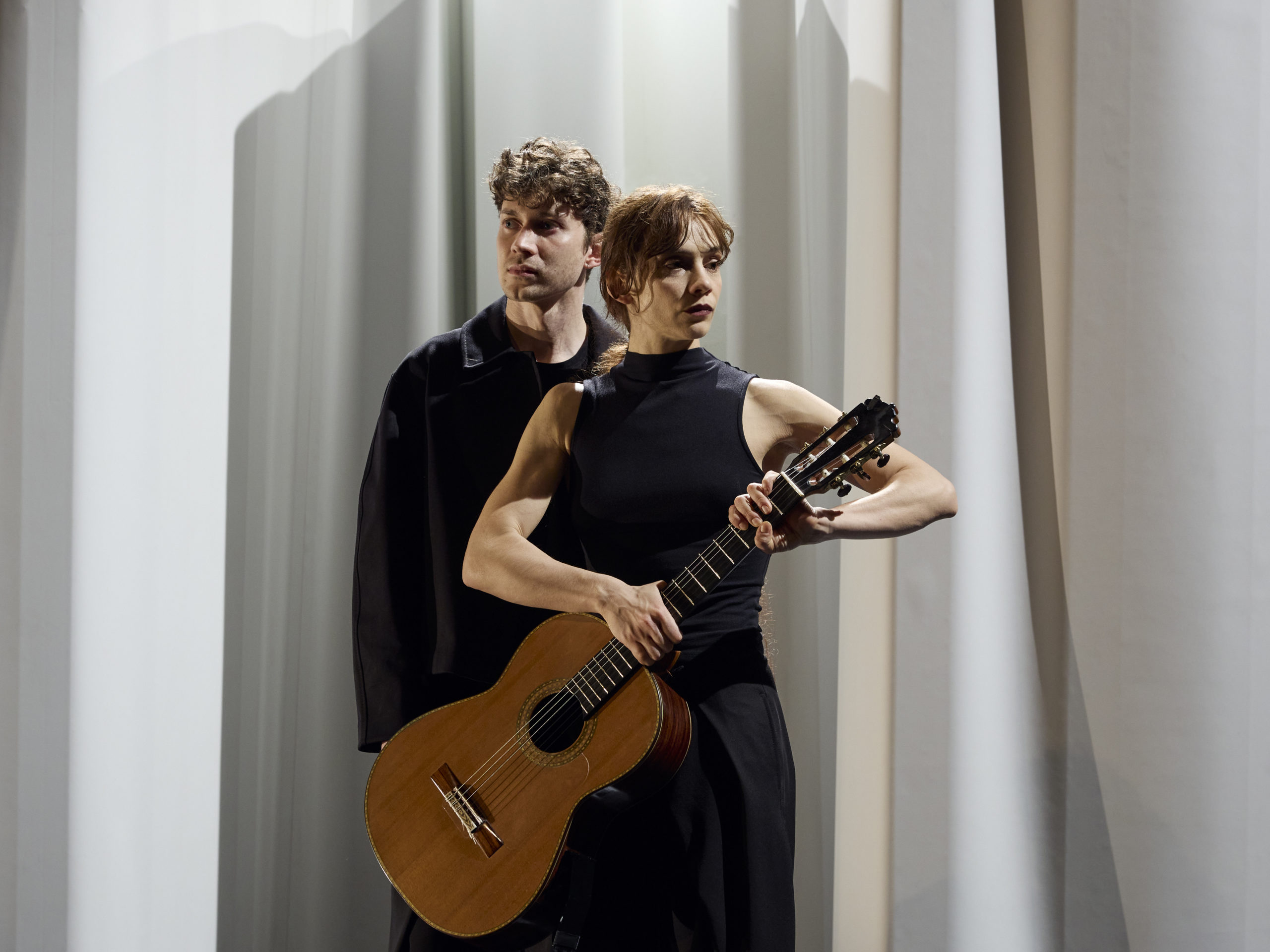
From our very first meeting, the idea of taking Seaven Teares by John Dowland — a variation on his famous Flow My Teares — as our starting point naturally emerged. Firstly because this song for lute and voice is already part of our repertoire, and secondly because Flow My Teares is a pavane, a dance. And it is also through dance that we propose to approach Dowland’s work. Here, music and dance are fundamentally intertwined. By bringing our artistic practices together, with all the curiosity and risk this entails, we imagine our meeting on stage as a concert that gradually shifts toward space and movement.
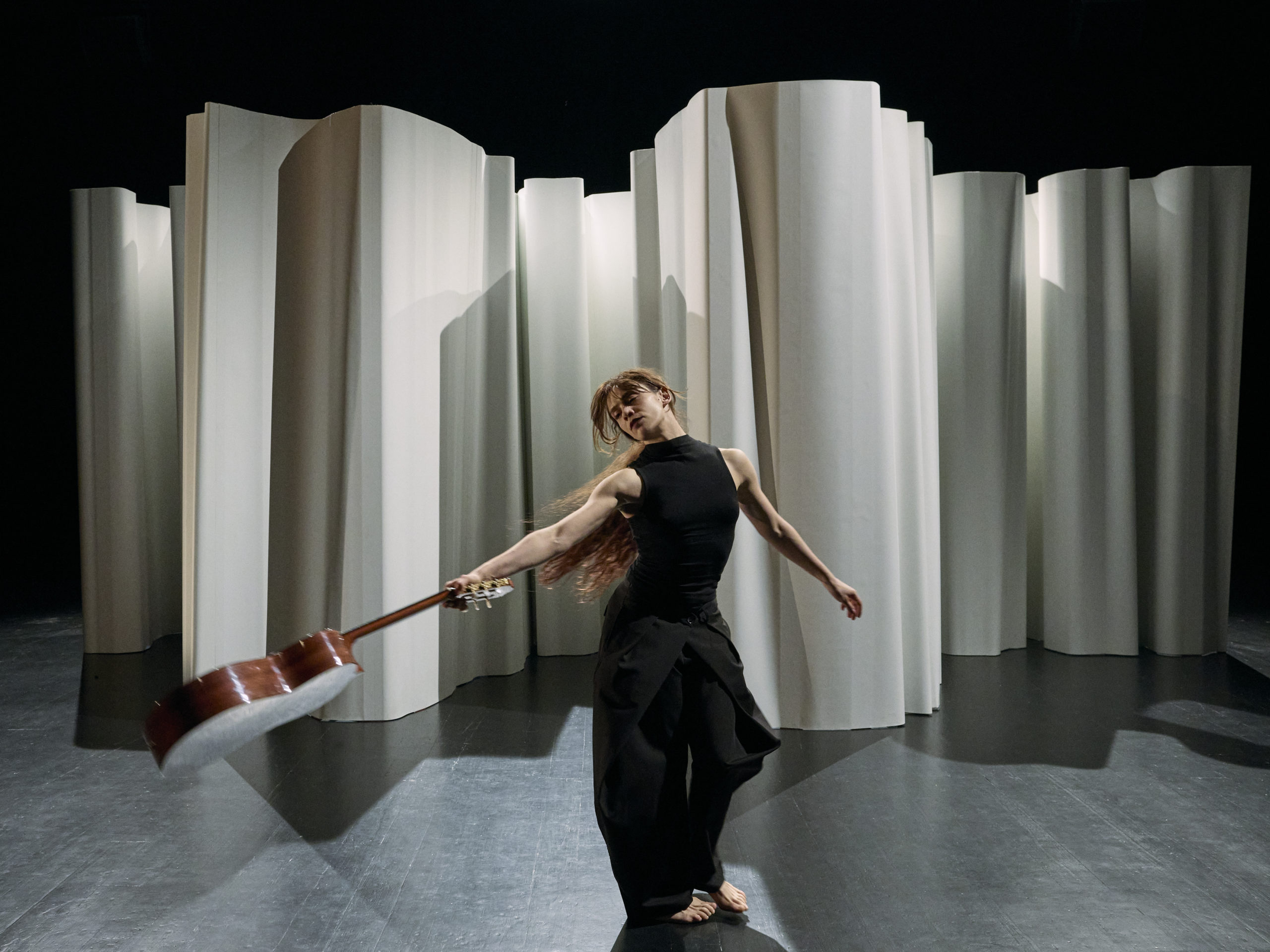
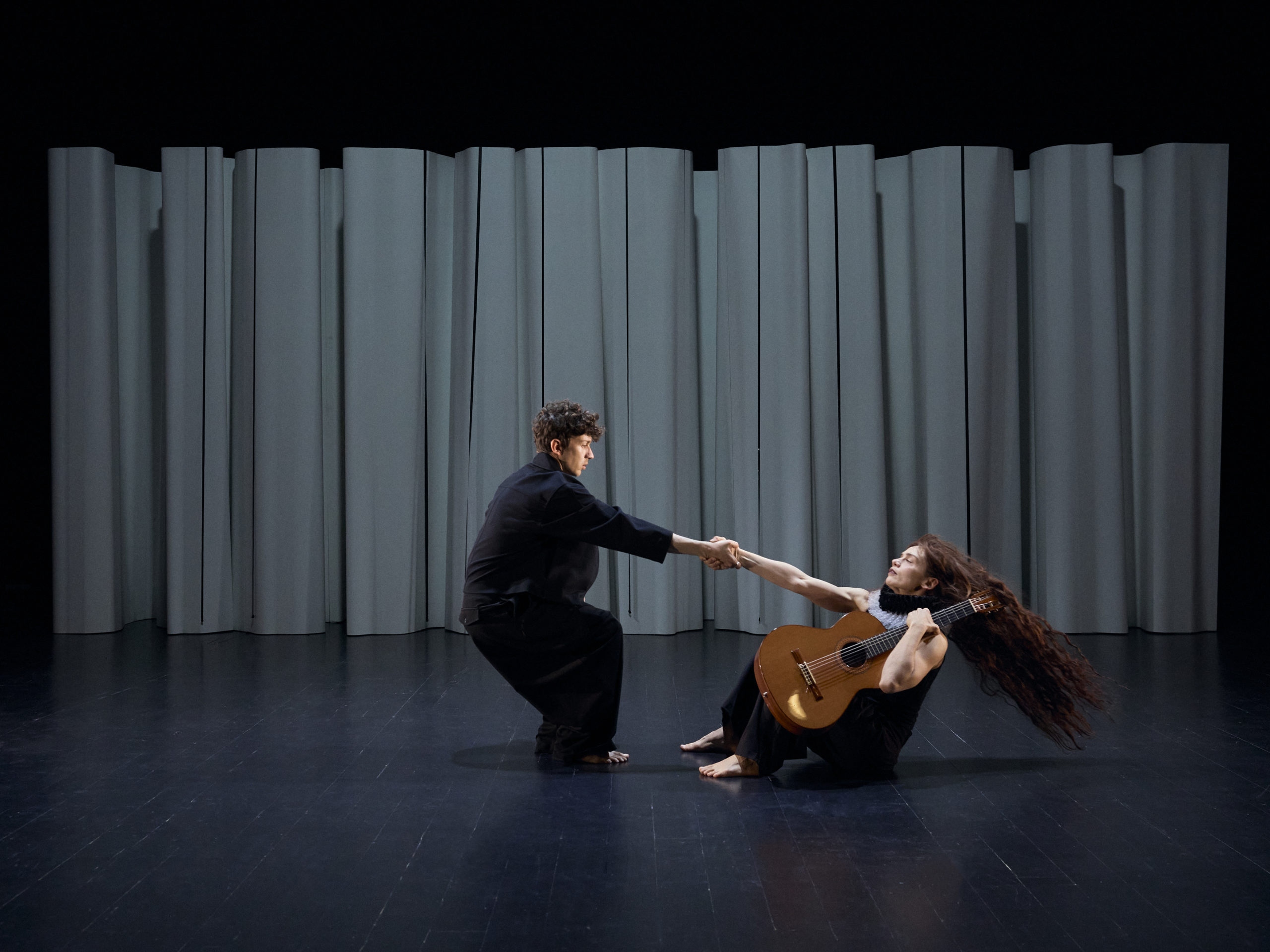
From this comes the need to find new ways of setting bodies in motion and making the instrument resonate. Not only can the guitar — through its weight and shape — create a surprising dialogue with the body, but it can also express itself unexpectedly through gravity and centrifugal force. Thus, the guitar appears here less as an inert object than as a partner: a fully-fledged character seeking to enter into movement.
John Dowland is undoubtedly the greatest English composer and lutenist of the Renaissance. In Seaven Teares, he develops the motif of tears until it becomes a musical substance in its own right. He inscribes it in descending lines and chromaticisms that seem literally to make the music “flow.” Dowland’s tears are also those of an era. Melancholy runs throughout Elizabethan England; it can be found in the works of William Shakespeare and later in those of Henry Purcell. It becomes almost an aesthetic of the world, a way of inhabiting the uncertainty of a century shaken by religious, scientific, and philosophical revolutions. Humanity discovers a world in transformation and gradually loses its former bearings. Dowland is one of the most striking symbols of this upheaval, even in his musical self-portrait: Semper Dowland, semper dolens — “always Dowland, always sorrowful.”
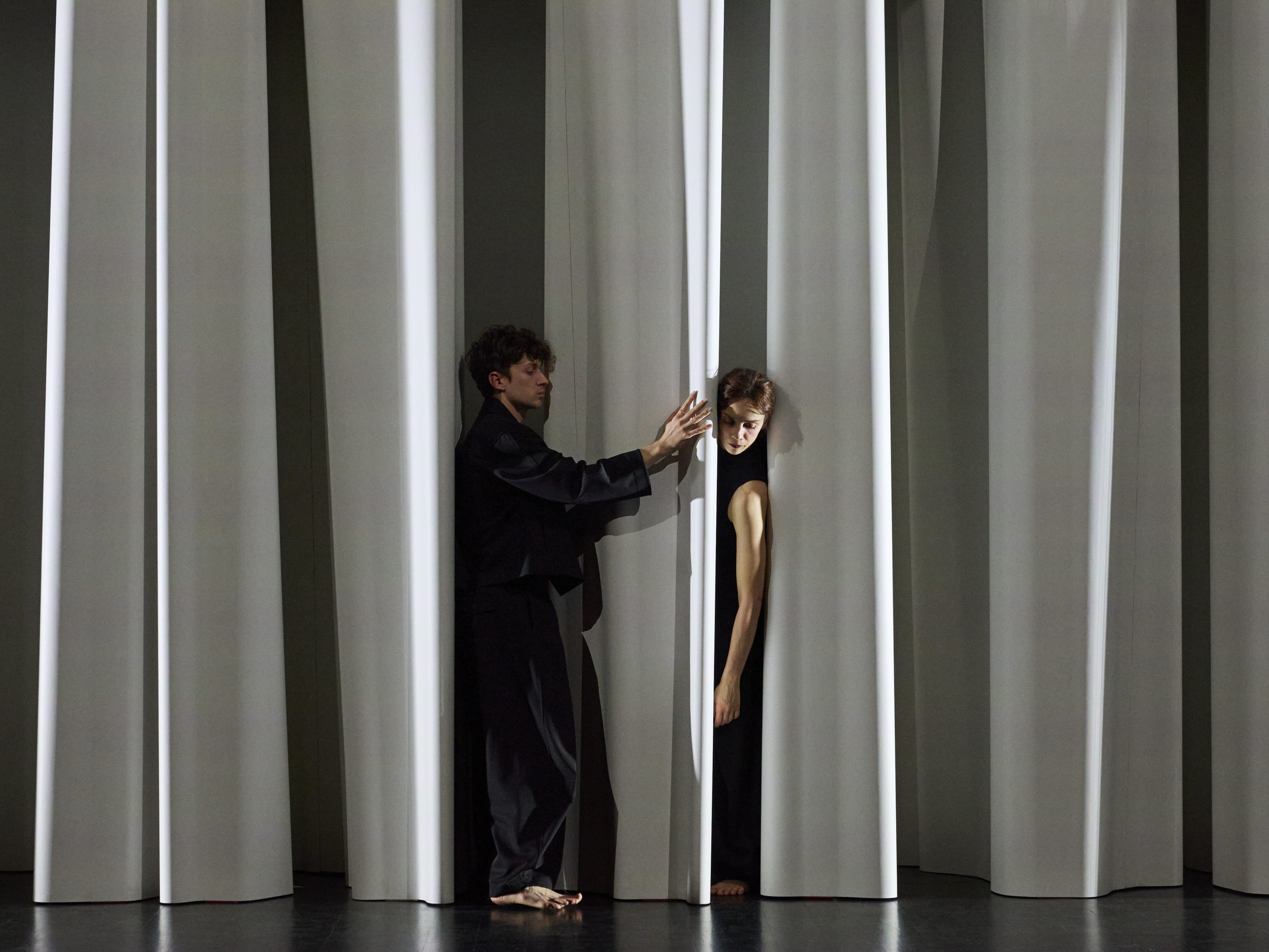
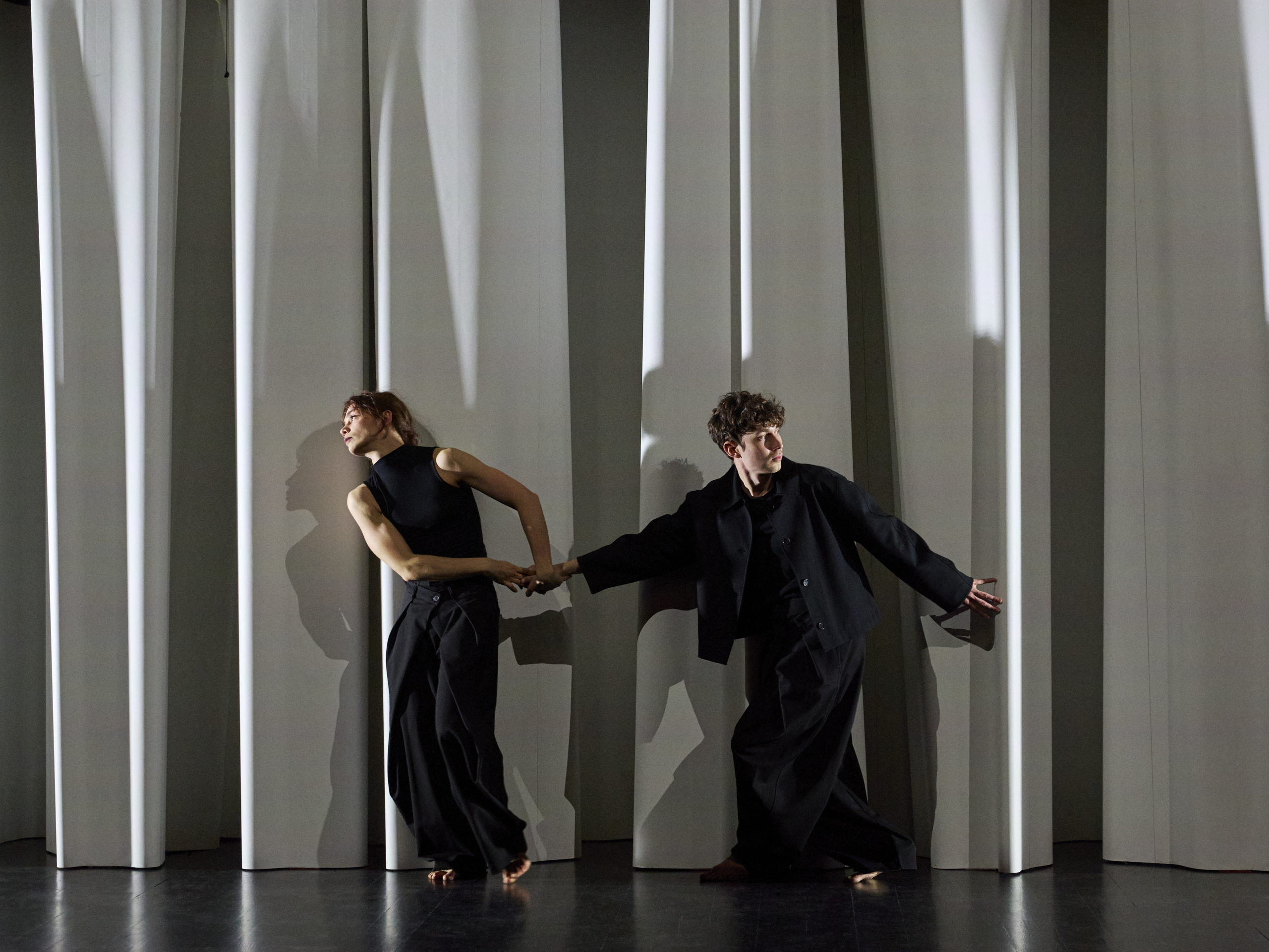
Where does melancholy reside? In the folds of our soul. We therefore imagine, on stage, a scenography of folds: a thirty-two-metre surface folded back upon itself like a piece of fabric, an intestine, or a ruff collar. A space in whose folds bodies may lose themselves, at times drawn in or cast out by its entrails. And as these folds unfold, buried emotions are revealed. An essential question then emerges: is melancholy necessary for creation? In Seaven Teares, John Dowlandtransformed his signature work into seven pavanes. Following in his footsteps, we adopt the same approach on stage: above all, never fixing a form, but allowing it to take on different folds.
Thibaut Garcia, Aure Wachter, Aurélien Bory
DISTRIBUTION
With
Thibaut Garcia & Aure Wachter
Design, scenography, direction Aurélien Bory
Musical Direction Thibaut Garcia
Choreography Aure Wachter
Light design Arno Veyrat
Set Technical Conception Pierre Dequivre and Pierre Pailles
Technical and artistic collaboration Stéphane Chipeaux-Dardé
Set construction Pierre Pailles, Pierre Dequivre, Steve Duprez and Stéphane Chipeaux-Dardé
Costumes Gwendoline Bouget
Technical Director and stage manager Thomas Dupeyron
Stage manager Julien Launay
Light Manager Arno Veyrat
Sound Manager Adrien Maury
Head of productions Marie Reculon
Press Agence Plan Bey
Production Compagnie 111 – Aurélien Bory
Coproduction ThéâtredelaCité – CDN Toulouse Occitanie, La Philharmonie de Paris, Théâtre d’Orléans – Scène nationale, Agora, Cité Internationale de la Danse | Montpellier Danse + CCN Occitanie
Rehearsals and residencies/strong> Théâtre de la Digue, théâtre Garonne, ThéâtredelaCité – CDN Toulouse Occitanie
Compagnie 111 – Aurélien Bory is under a funding agreement with the French Ministry of Culture / Direction Régionale des Affaires Culturelles Occitanie. Its functioning is helped by the Région Occitanie / Pyrénées – Méditerranée as part of the funding program for structuring operators and the City council of Toulouse. It is supported by the Departmental Council of Haute-Garonne and the City council of Toulouse for some of its projects. Compagnie 111 receives support from the French Institute for some of its international projects.