

French (Fr)English (United Kingdom)
  • NOW
  • COMPAGNIE 111
  • PERFORMANCES
  • TOURS
  • Creations

Introduction

Création

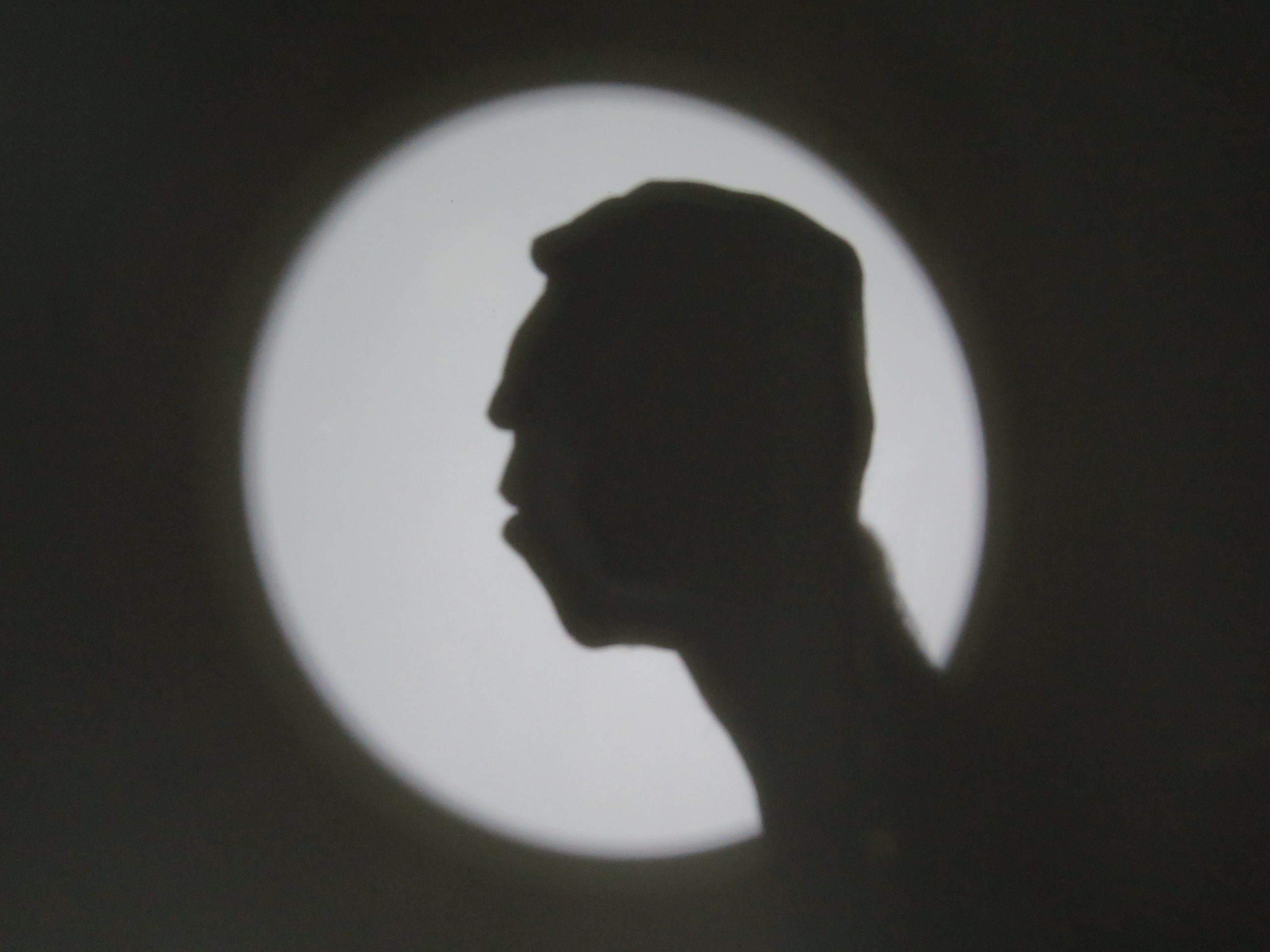
so_09

Photo © Aglaé Bory


Created in October 2009 at TNT - Théâtre national de Toulouse Midi-Pyrénées

With Olivier Alenda, Olivier Boyer (change of cast instead of Pierre Cartonnet since February 2010)


Conception, Scenography, Direction Aurélien Bory

Robot operator and programmer Tristan Baudoin

Composer Joan Cambon

Light designer Arno Veyrat

Artistic collaboration Pierre Rigal

Direction assistant Sylvie Marcucci

Sound engineer Stéphane Ley

Costume designer Sylvie Marcucci

Technical conception of sets Pierre Dequivre

Set construction Atelier de la Fiancée du Pirate

Screen props Frédéric Stoll

Patina Isadora de Ratuld

Masks Guillermo Fernandez

Stage manager Arno Veyrat

Technical managers in alternation Joël Abriac, Stéphane Ley, Arno Veyrat

Assistant stage manager Thomas Dupeyron

Production, administration, booking Florence Meurisse, Christelle Lordonné


Production Compagnie 111 - Aurélien Bory
Coproduction TNT - Théâtre national de Toulouse Midi-Pyrénées, Théâtre Vidy-Lausanne E.T.E, Théâtre de la Ville - Paris, La Coursive - Scène nationale La
Rochelle, Agora - Pôle national des Arts du cirque de Boulazac, Le Parvis - Scène nationale Tarbes-Pyrénées, London International Mime Festival
Residency TNT - Théâtre National de Toulouse Midi-Pyrénées
Thanks to L’Usine, lieu conventionné Arts de la rue - Tournefeuille
Compagnie 111 - Aurélien Bory is under agreement with Ministère de la Culture et de la Communication - Direction Régionale Affaires Culturelles Midi-Pyrénées, Region Midi-Pyrénées, and benefits from the support from City of Toulouse and Conseil Général de la Haute-Garonne.
Compagnie 111 - Aurélien Bory benefits from the support from Fondation BNP Paribas for the development of its projects.


//////////////////////////////////////////////////////////////////////////////////////////////////////////////////////////////////////////////////////


Performances
since October 2009


TOULOUSE Création TNT - Théâtre national de Toulouse 7 > 24 octobre 2009

LAUSANNE (Suisse) Théâtre Vidy-L 27 octobre > 8 novembre 2009

ANNECY Bonlieu - Scène nationale 6 > 7 janvier 2010

PARIS Théâtre de la Ville - Les Abbesses 23 février > 6 mars 2010

SETE Théâtre - Scène nationale 26 > 27 mars 2010
DOUAI Hippodrome - Scène nationale 1er avril 2010

TARBES Le Parvis - Scène nationale 11 mai 2010

ZAGREB (Croatie) Festival Eurokaz 26 > 27 juin 2010

ROME (Italie) Festival Roma Europa 30 septembre > 2 octobre 2010

CHÂTEAUROUX Equinoxe - Scène nationale 9 > 10 octobre 2010

NEVERS Maison de la culture 13 > 14 octobre 2010

LA ROCHELLE La Coursive - Scène nationale 20 > 22 octobre 2010

COMBS LA VILLE Sénart - Scène nationale 16 > 19 novembre 2010

CAEN Théâtre 30 novembre > 3 décembre 2010

VELIZY-VILLACOUBLAY L'Onde, Espace culturel 9 > 10 décembre 2010

VALENCIENNES Le Phénix - Scène nationale 14 > 15 décembre 2010


//////////////////////////////////////////////////////////////////////////////////////////////////////////////////////////////////////////////////////


Journal du Théâtre de la Ville
Interview of Aurélien Bory by Christophe Lemaire, January 2010


Your work could be defined as a crisscrossing of theatre, stage set (or performance), and circus. Do you think that this makes it difficult for the public to get the gist?

Not knowing what you are going to see is certainly one of the best ways of going to the theatre. In other words, going in a state of open-mindedness and acceptance of a new art form, without any preconceived ideas. In my productions, I try to leave spectators a lot of leeway. They themselves complete the work through an association of ideas, through their own references, through recognition and experience and through everything that influences the way they appropriate what they are seeing. It is also necessary to shake things up, to stimulate people's imaginations. This is what I'm aiming at when I take things out of their usual context. In fact this is where Sans objet starts: taking an industrial robot and putting it on stage - a 1970s robot from the automotive industry. It was the first robot used by people, a sort of starting point of this new relationship. In its own context it has a definite use whereas on stage it loses it. It becomes "objectless", useless, and our view of it therefore changes. It becomes the receptacle and the mirror of our projections. I see theatre a bit like that.


You often refer to your players as actors and yet they don't utter a word and have no text.

When I say actor, I'm thinking of action. An actor is someone who is in action. In Sans objet, the actor uses his body as the main instrument for action. And on this basis dialogue with the robot is played out because the robot also has a body, an articulated arm and six axes capable of movement around itself. Generally speaking, I think that all means of action can be used on stage and, in theatre, I don't perceive a hierarchy between text and other means of action.


In Sans objet, the robot, which is omnipresent, appears as incredibly dominant, to the point of always posing a potential threat to the players. This encounter between mankind and, seemingly insurmountable elements, already struck me in Les sept planches de la ruse. Is this confrontation of scale something that interests you particularly?

In actual fact, I try to get mankind to meet head-on with something that is totally unfamiliar by using a specific space or an object placed on stage to which I add the capacity of movement and action. The idea of the robot came from my contemplation about theatre and the animated object. It combines Kleist and his text on puppet theatre, Schlemmer in his relationship with the object and even Meyerhold, and his constructivism. In each case there is the notion of a juxtaposition of the living and of the inert, as if this confrontation revealed a secret. And also the idea of the robot seemed important today given our relationship with technology. It is complex. We love it and we use it as much as we hate it and avoid it. It upsets our relationship with the world. These are the issues in Sans objet.


What "story" did you want to tell, if you had an appropriate formulation?

The story would be: robots and men, what have they got to tell? It could also be mankind's capacity to adapt or else the unexpected emergence of beauty, or maybe primitive forms in technology or else the future of humankind after humankind or else the simple pleasure of the use of form.


Sans objet, which I experienced at its opening in Vidy-Lausanne, is both funny and disturbing. At first, the human body comes across as technically efficient and the robot as sensitive which lends a burlesque and fantasy-like (or poetic) vocabulary to things. Then the whole thing subtly glides towards a terrifying dehumanisation and the machine ends up giving a clear demonstration of its physical power and force. Was this idea about friction between humour and tension already there at the start?

Yes. I tried to widen the scope to get more contrast between scenes. Humour operates like a counterpoint to certain strong visual impressions that are produced by stage-setting or lighting within a rigorous framework. I'm not looking for laughs but I try to get humour to increase the tension. I show men in uncomfortable, unstable and unknown situations. Burlesque action occurs to add spaciousness, a sort of "no, this is not quite serious".


In one theatre, I was tickled to see a lot of young children of around ten accompanied by their parents. Is this something that touches you? Something you planned?

Let's say that my shows can been seen by children. I pay special attention to their reactions. There isn't any interfering embarrassment. You don't doubt their sincerity. I never put on shows for the children but I am delighted when I see a few of them in the audience. I consider them as my allies.


In your opinion then, is man's relationship with technology or machines that worrying for the future?

No. I wouldn't say that. But we are living in a time when we can't quite imagine our future. Maybe it comes from the fact that ten years ago the year 2000 didn't happen. All our projections about progress, technology and the future just went for a burton. We have a sharpened awareness of our finiteness. So we have to dream different dreams.

Next performance

2012,29 August > 2012, 01 September
BÂLE(Suisse)
Kaserne Basel, Theaterfestival ...
>> See tour

Press & Medias

Tracks "Dance machine" by Carine Roy
Pas de trois inédit pour robot et acrobates by Rosita Boisseau
>> Read all articles

Photos

Sans objet © Aglaé Bory

            
Sans objet © Aglaé Bory
Sans objet © Mario Del Curto
Sans objet © Aglaé Bory
Sans objet © Mario Del Curto
Sans objet © Aglaé Bory
Sans objet © Mario Del Curto
Sans objet © Aglaé Bory
>> See all photos
>> Hide the photos

Exchanged glances

Stage sketches by Skocko

Every performance

  • Azimut
  • Plexus
  • Géométrie de caoutchouc
  • Sans objet
  • Questcequetudeviens?
  • Les sept planches de la ruse
  • Plus ou moins l’infini
  • Taoub
  • Plan B
  • IJK
Copyright 2010 © Compagnie 111 - Aurélien Bory - All rights reserved - Exotypie / Blograft