
de page
More or less infinity

More or less infinity
AURÉLIEN BORY- PHIL SOLTANOFF (creation 2005)
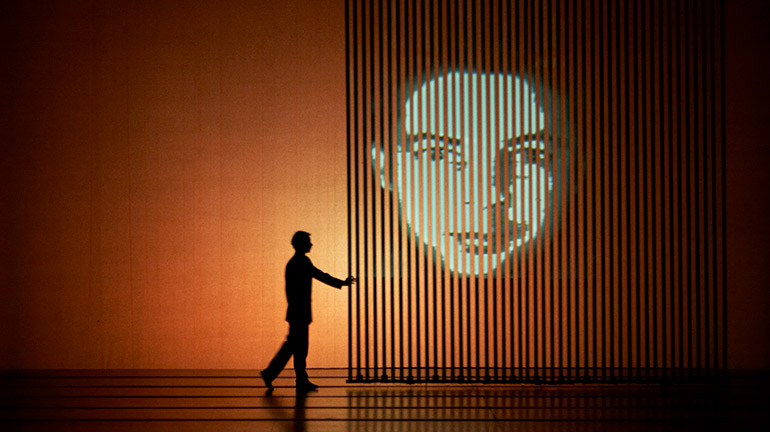
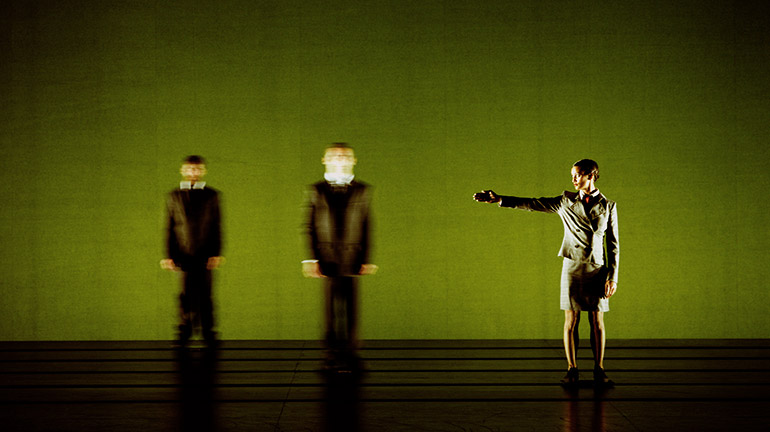
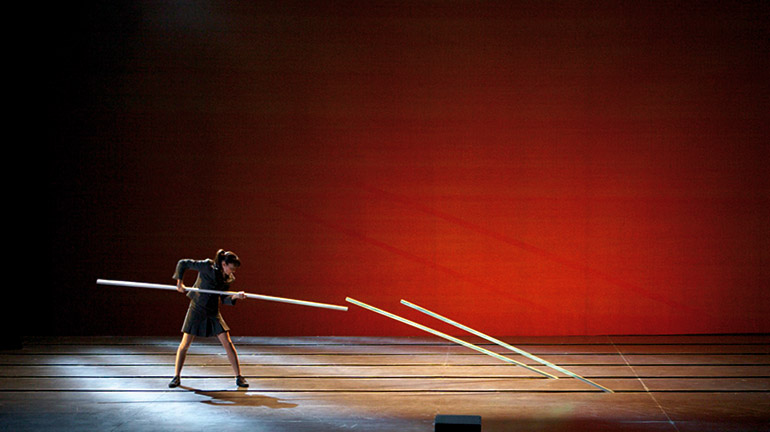
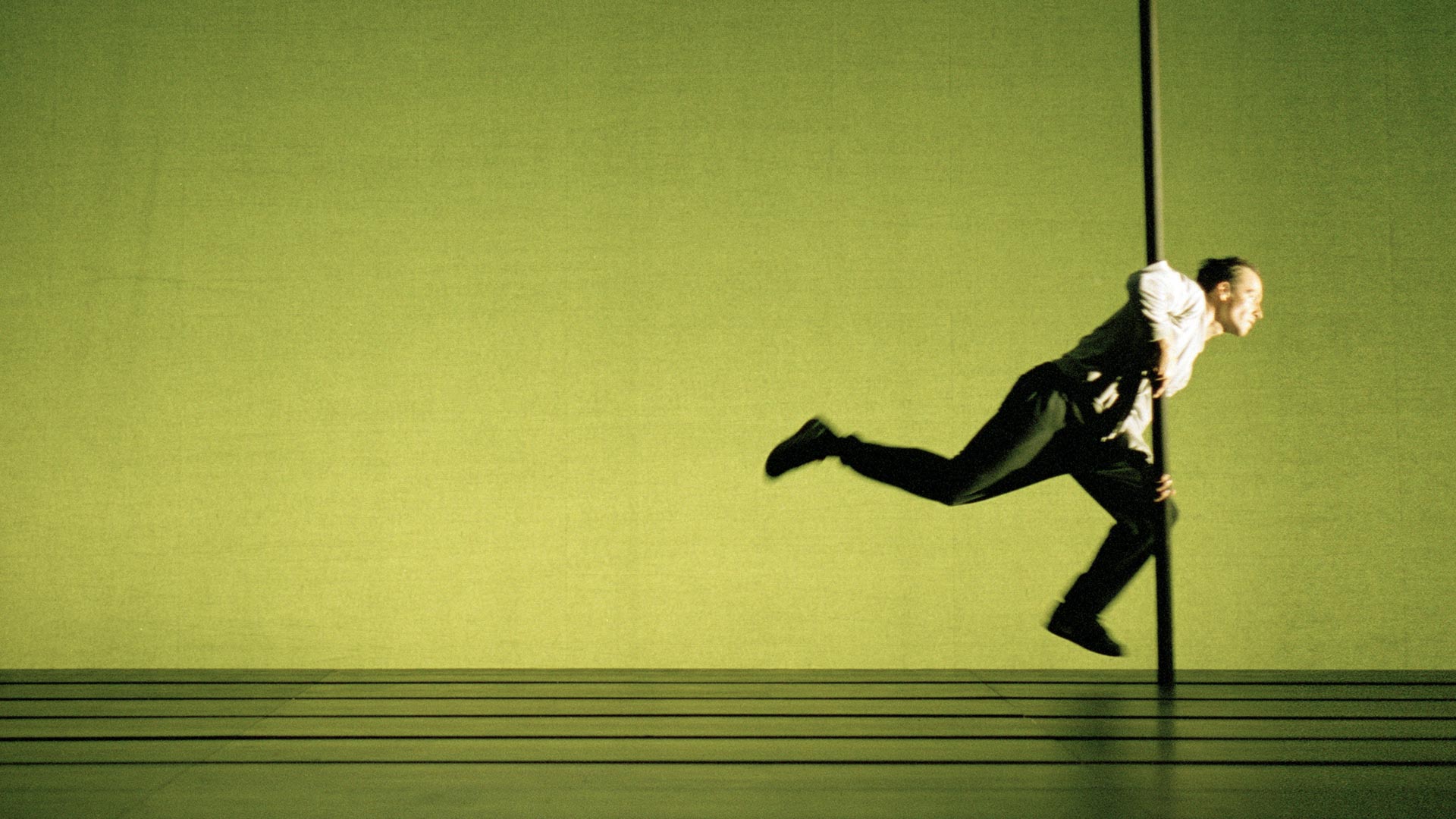
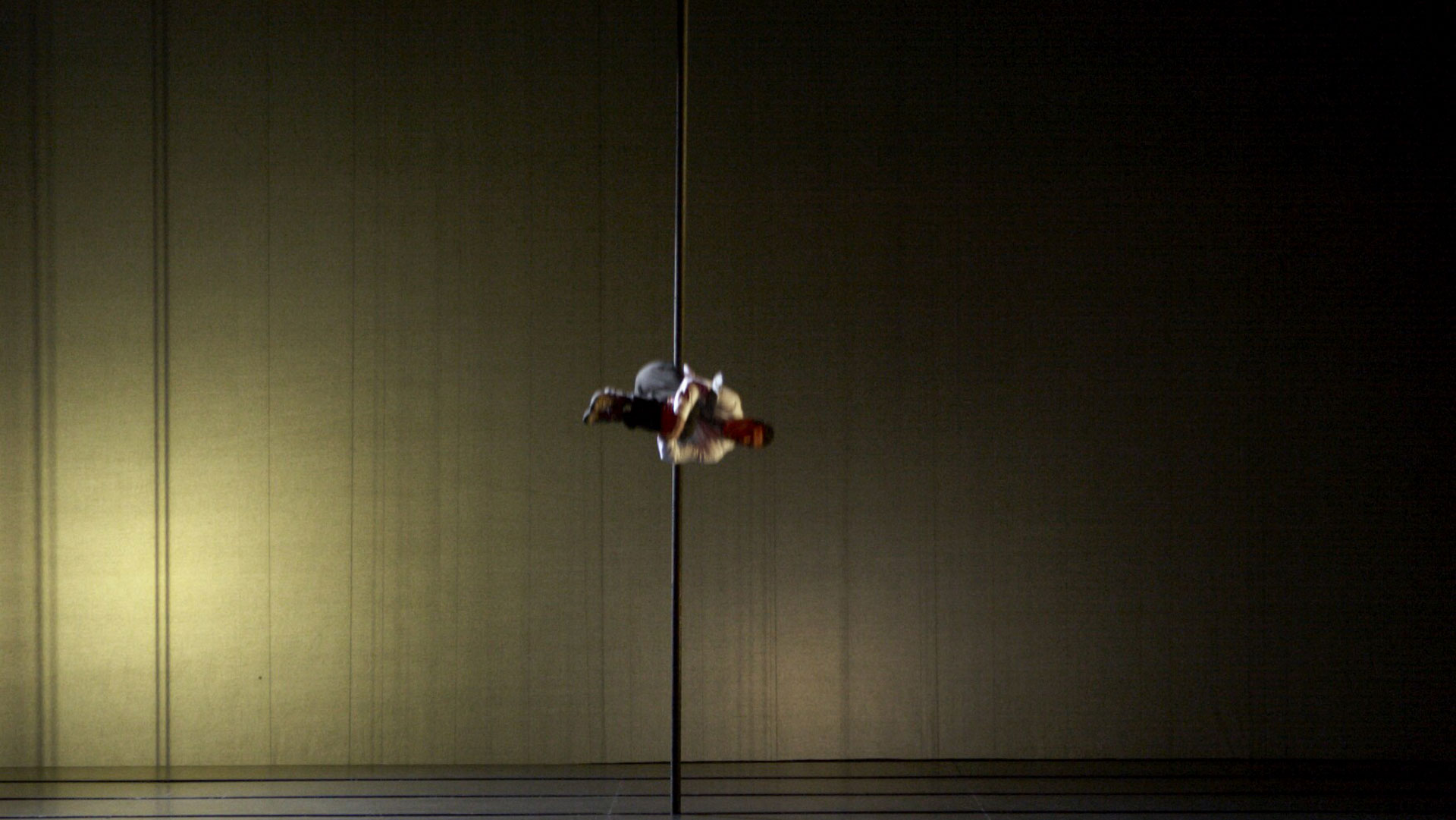
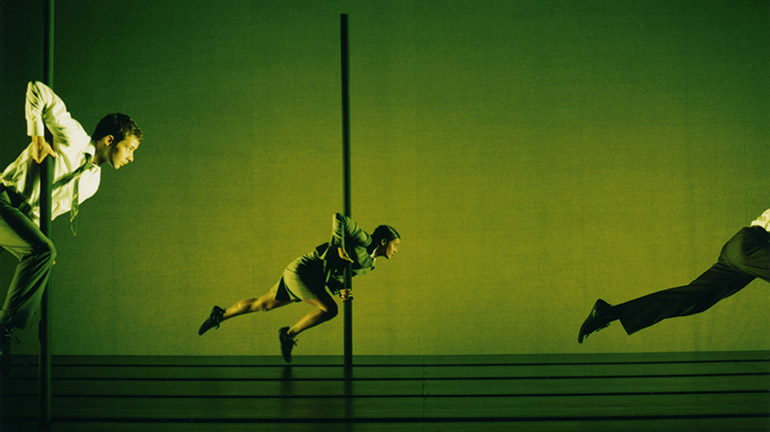
More or Less Infinity is a kinetic play. Movement is its main axis. This is the result of its very subject : the line, the fundamental nature of which is movement. The line is a direction that one can follow either way. Kinetics also is the result of the axioms of the trilogy: the continuous movements of objects set in motion by the acrobat, and the movements of the acrobat him/herself as primary means of action. Whereas IJK was fundamentally created around the art of juggling and Plan B based on acrobatics, More or Less Infinity intermingles both fields, only to erase their particularities and use their quintessence: movement, constantly opposed to its counterpart: immobility. The tension between immobility and movement, exercised throughout the play, reflects our relationship to space. Everything is set in motion, yet nothing appears to move.
LIMITS
More or Less Infinity deals with limits. The universe is in motion, life is in motion and we only know the beginning of this movement. It was important in More or Less Infinity to tackle the idea of limit, or end. The limit is a notion contending that of infinity. Furthermore, More or Less Infinity is the last chapter of the trilogy, therefore its limit. It is also a creation set on the borders of the different arts involved on stage, satisfied with its nebulous definition.
© Oskar Schlemmer – “Man as a dancer”
The BODY
More or Less Infinity explores the relationship between man and space, or more precisely it deals with man’s body in relation to space. And this very body, perceived as a limit, an obstacle even, is the subject. More or Less Infinity tells of the body’s dissolution or on the contrary, its extension; each a different direction of the same movement. Images, communications, sending space probes… aren’t these extensions of our bodies?
NETWORKS
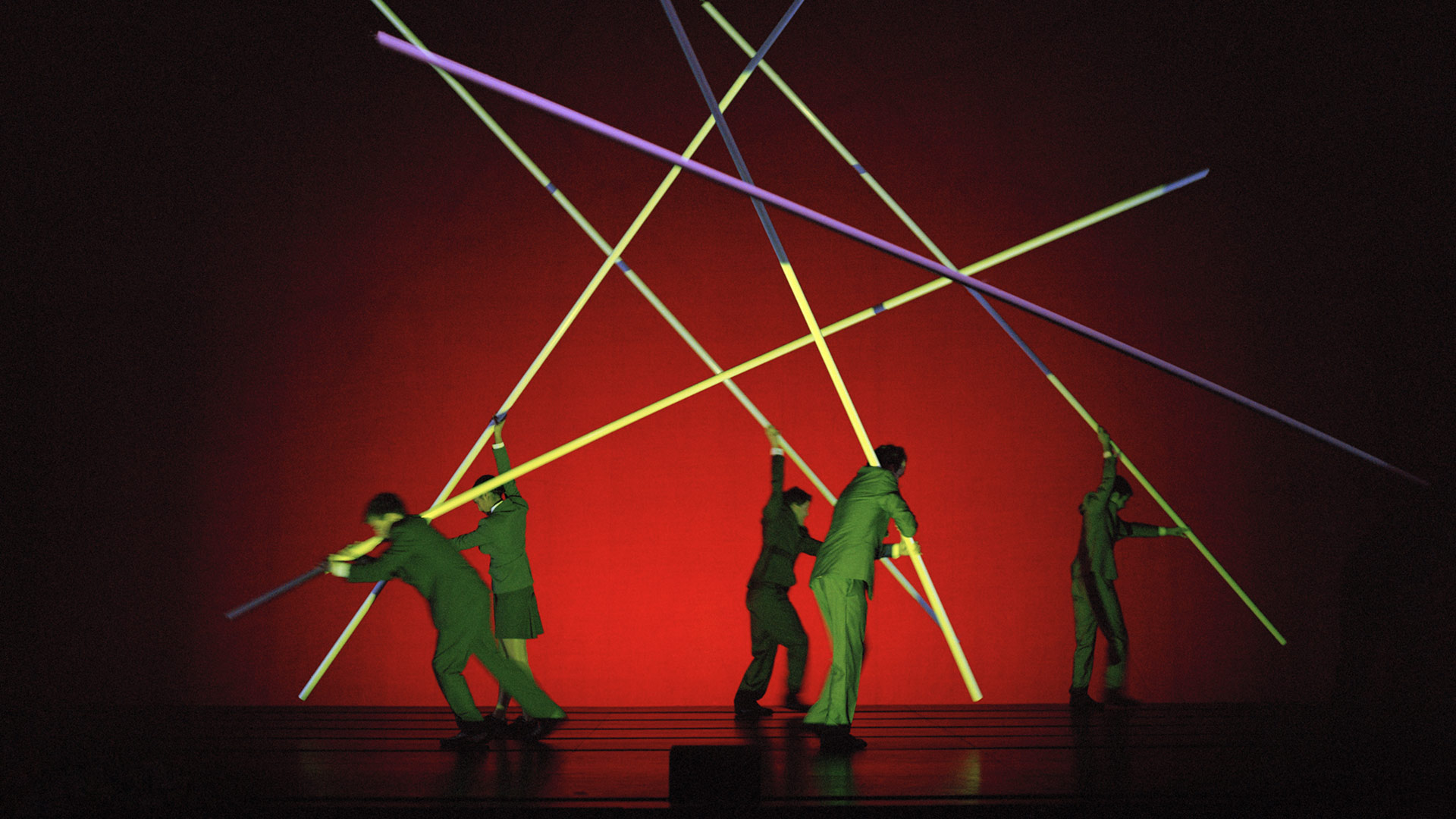
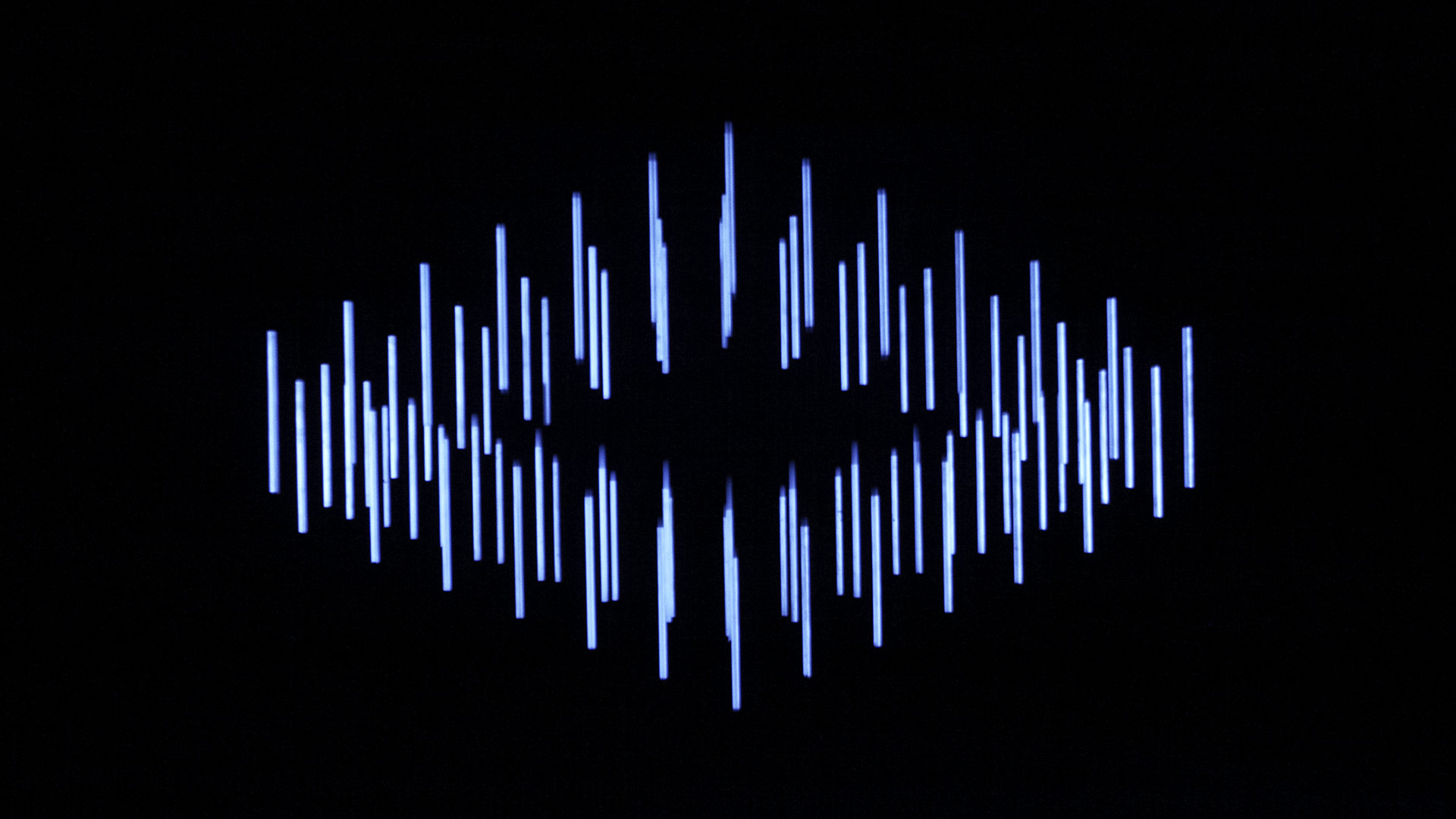
This crossroad between meanings and connections creates a network that can be apprehended on several levels. There are as many merging points and ramifications as in the line-networks of Schlemmer’s conception of space. The idea of a network also converges with that of the primordial structure of space, where light and space are one. Furthermore the conjuration of artificial, electronic, undulatory networks meddles with the subject. Most of Phil Soltanoff’s soundtrack is created from recording samples of a fax machine. This approach reveals a lot about our creative process, which is merely based on research and experimentations: embarking at a starting-point and extending it to infinity.
HUMANITY
In its very title, More or Less Infinity takes up man’s relation to space. “More or Less” being on man’s standpoint, and “infinity” on the angle of space. “What is humanity?” asked Jean-Luc Godard after the show, and he answered: “It is a curve, null in all its sequence, except in one of its point where it is infinite.” It is the curve of Laurent Schwartz, French mathematician who was awarded the Fields Medal.
Beauty is but infinity contained within a contour.
Victor Hugo
This is the straight line whose tension represents the most concise form of the potentiality for endless movement.
Vassily Kandinsky

A being and neon
14 April 2007
The young artists of Compagnie 111, a highly original Toulouse company, have put on a show that’s full of movement. The company, far from pursuing overarching box office receipts and trends, entertainingly searches for certain effects, simple in appearance yet very sophisticated in conception.
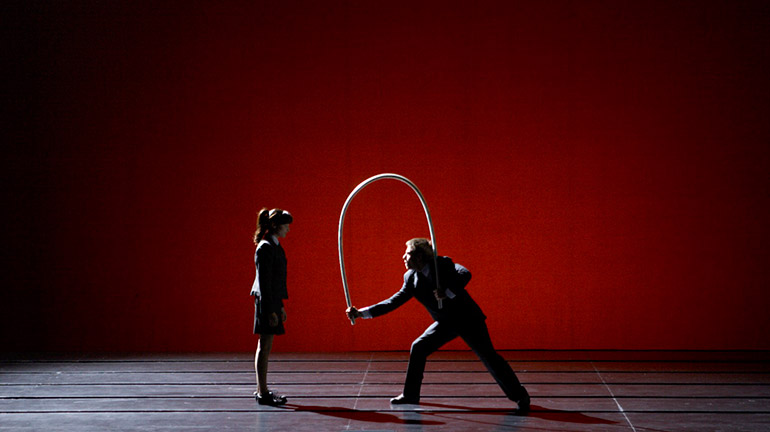
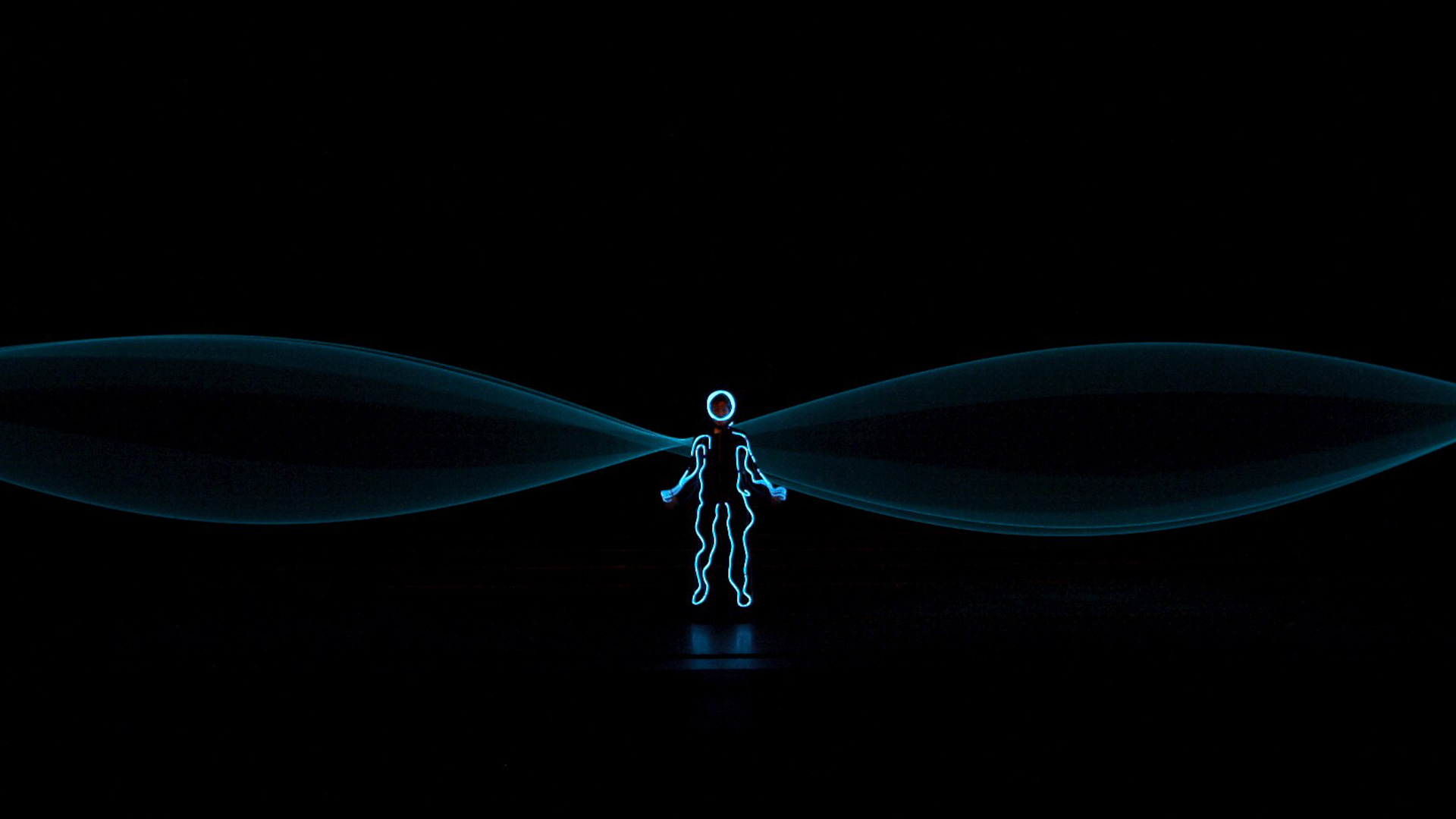
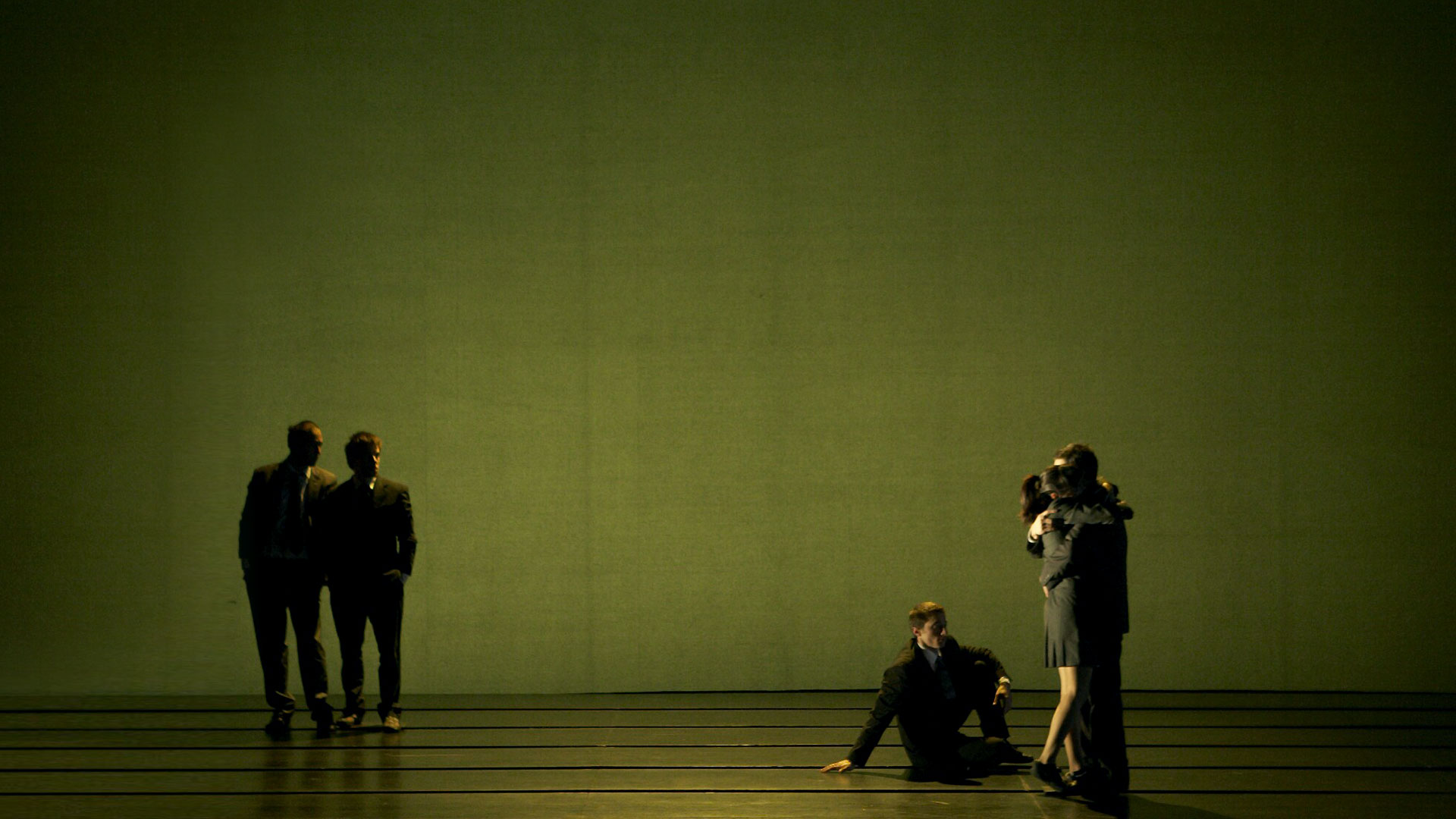
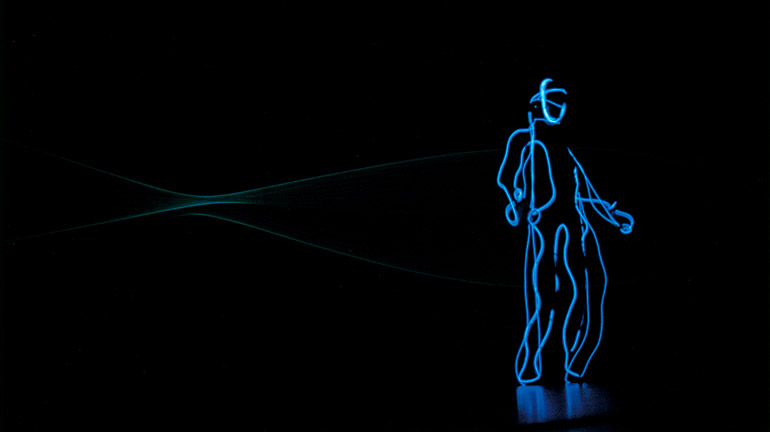
It all begins magnificently with a ballet of batons which the subtly regulated lights (Arno Veyrat) disguise as neon tubes. The geometric patterns in space which develop in this opening are absolutely fascinating and we immediately fall under the spell of Aurélien Bory, the designer of Plus ou moins l’infini, and the director, Phil Soltanoff. For them, kinetics is king. No words, a little music (it is signed Soltanoff), and Alenda and Cassier, two of the performers, a stage ploughed with furrows, five boys and a girl in grey costumes, four equally important people in the production unit, and the die is cast: the ballet enthrals us. The actions are simple, but they are executed with a grace and lightness that draw laughter from children and adults alike. There is mischief and charm about them, work, discipline, inventiveness and renewal. For while this young team does call to mind some groups of artists on the borderline between dance, circus and theatre, who know how to use video to perfection,
Compagnie 111 offers a very special universe and this show comes to us like an aesthetic manifesto. It’s our good fortune that these young teams provide such enchantment, yet with a very contemporary vocabulary.
Armelle Héliot
The image in a concave mirror suddenly reappears before us after drawing away into the infinite distance, so too, does grace return.
Heinrich Von Kleist
distribution
Performers Olivier Alenda, Aurélien Bory, Pierre Cartonnet, Julien Cassier, Mélanie Chartreux, Aurelius Lorenzi
With Tristan Baudoin, Stéphane Ley, Frédéric Stoll, Arno Veyrat
Design, artistic direction Aurélien Bory
Direction Phil Soltanoff
Light designer and technical director Arno Veyrat
Artistic consultant Hanne Tierney
Music Olivier Alenda, Julien Cassier, Phil Soltanoff
Added music Ryoji Ikeda
Sound Designer Stéphane Ley
Stage Manager Tristan Baudoin, Frederic Stoll
Video Design Aurélien Bory, Arno Veyrat, Pierre Rigal
Set Pierre Dequivre and the technical team of the theater Vidy-Lausanne
Costume Designer Sylvie Marcucci
Painting Isadora de Ratuld
Head of Production Florence Meurisse
Production manager Clément Séguier-Faucher
Press Plan Bey Agency
PRODUCTION Compagnie 111 – Aurélien Bory
COPRODUCTIONS ThéâtredelaCité – CDN Toulouse Occitanie, Théâtre Vidy-Lausanne E.T.E, Grand Théâtre de Luxembourg, Les Gémeaux/Sceaux/Scène nationale, La Coursive-Scène nationale de La Rochelle, Centre culturel Agora–Scène conventionnée de Boulazac, Equinoxe–Scène nationale de Châteauroux, TNBA -Théâtre national de Bordeaux-Aquitaine, London International Mime Festival, Le Carré magique-Scène conventionnée de Lannion-Tregor
With the help of Théâtre Garonne-Toulouse.
With the support of Ministère de la Culture-DMDTS, Conseil Régional Midi-Pyrénées, Conseil Général Haute-Garonne, Ville de Toulouse, Convention Culturefrance/Ville de Toulouse.
The best way to reach infinity is to take the outside route.
Didier Hallépée (« les divagations du mathématicien fou », The Ravings of the Crazy Mathematician)